Volkswagen Digital CX Optimization
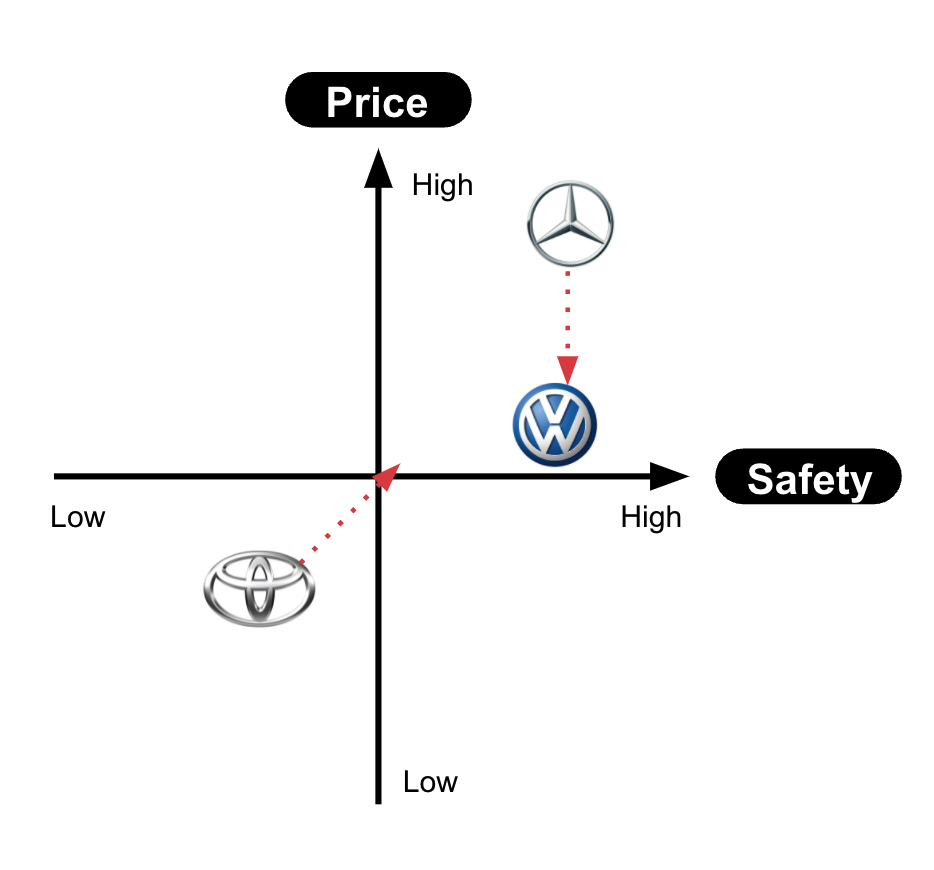
With Mercedes-Benz courting younger buyers and Toyota pushing into luxury, Volkswagen needed its digital experience to work harder. Working with Ogilvy, I ran a mixed-method audit of the website, app, and mobile experience to find out exactly where the digital funnel was leaking, and what to fix first.
Project Details
Four things standing between Volkswagen and its digital audience
Brand content lacked visibility. Weak search performance meant decreased user engagement and organic traffic, even where the content itself was strong.
Customers struggled to find relevant information. The homepage didn't surface promotional offers or key content intuitively, adding friction before a visitor got anywhere near a purchase decision.
The UI was inconsistent across platforms. Moving between web, mobile, and event microsites meant relearning the interface each time.
The My Volkswagen app went unnoticed. Existing owners weren't aware of key features already available to them, so a built asset sat underused.
Two audiences the proposal was built around.
The original brief didn't define formal personas — these are reconstructed directly from the target-audience language in the proposal, not invented from scratch.
Already a Volkswagen owner, but largely unaware of what the My Volkswagen app can actually do. The app itself wasn't the problem; the awareness and onboarding path to it was.
- Doesn't know key app features exist
- Encounters inconsistent UI moving between web and app
Part of the younger demographic Mercedes-Benz was actively courting. Searches for vehicles and features, and compares options before ever reaching a dealership.
- Volkswagen ranks poorly for high-intent search terms
- Car comparison and 360° view features have unclear UI indicators
A mixed-method audit: 30% quantitative, 40% expert evaluation, 30% qualitative.
Tools audits, SEO analysis, heatmaps, and site-speed testing were paired with expert UX evaluation and competitive benchmarking, then checked against user interviews, A/B tests, and task-based usability studies. No single method would have surfaced the full picture on its own.
The website ranked poorly for high-intent search terms, limiting discoverability before a visitor ever reached the site.
Navigation didn't surface promotional offers intuitively, and mobile event sites suffered from slow load times and fragmented navigation.
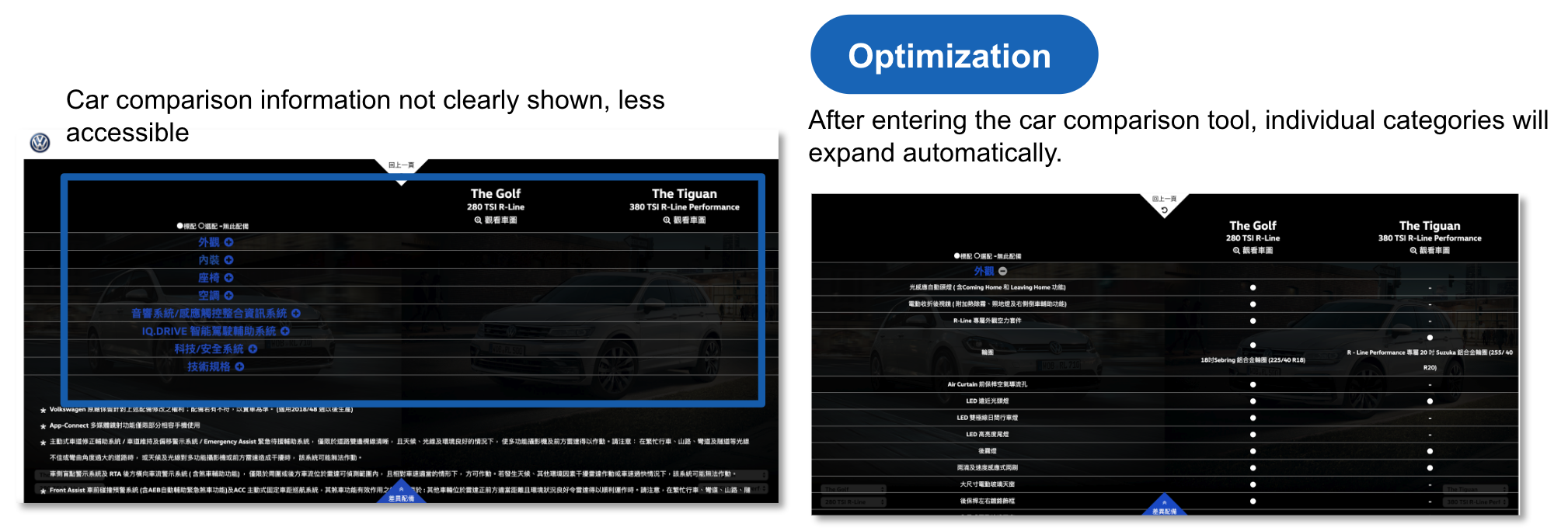
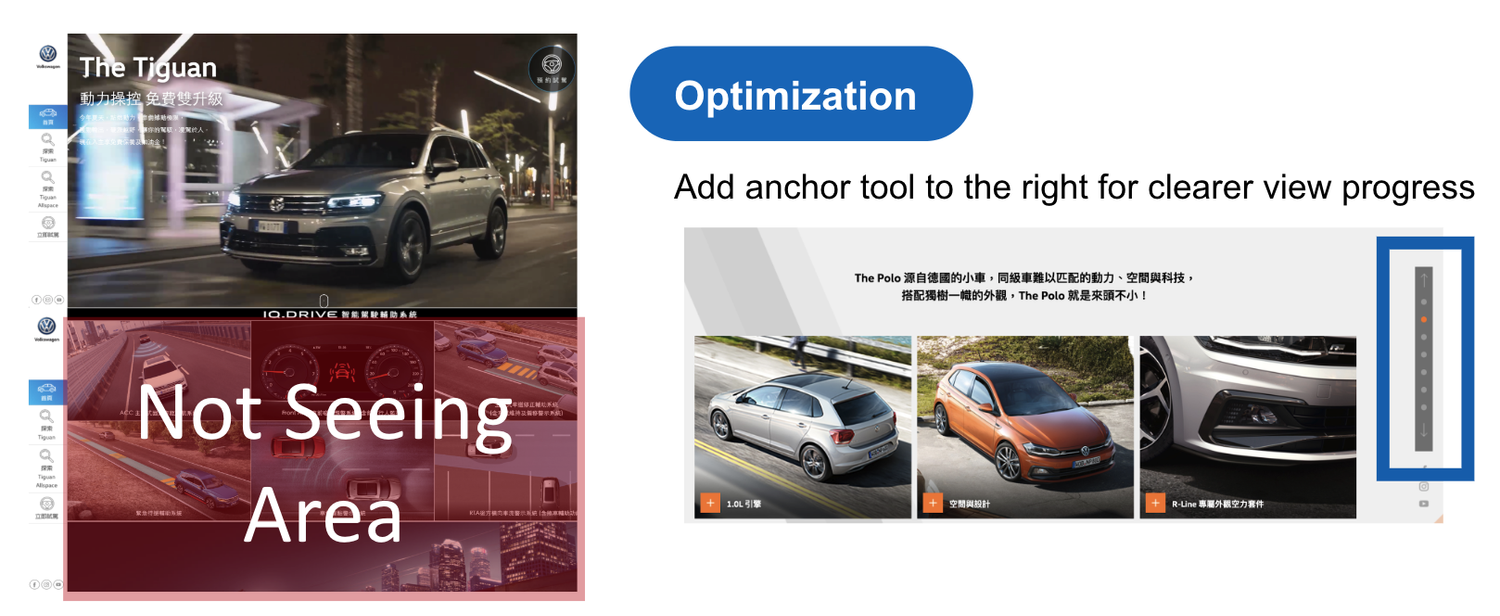
The car comparison tool and 360° view feature both had unclear UI indicators, so users didn't always realize the functionality was there.
Users were unaware of key features like the My Volkswagen app, meaning an already-shipped capability wasn't reaching the owners it was built for.
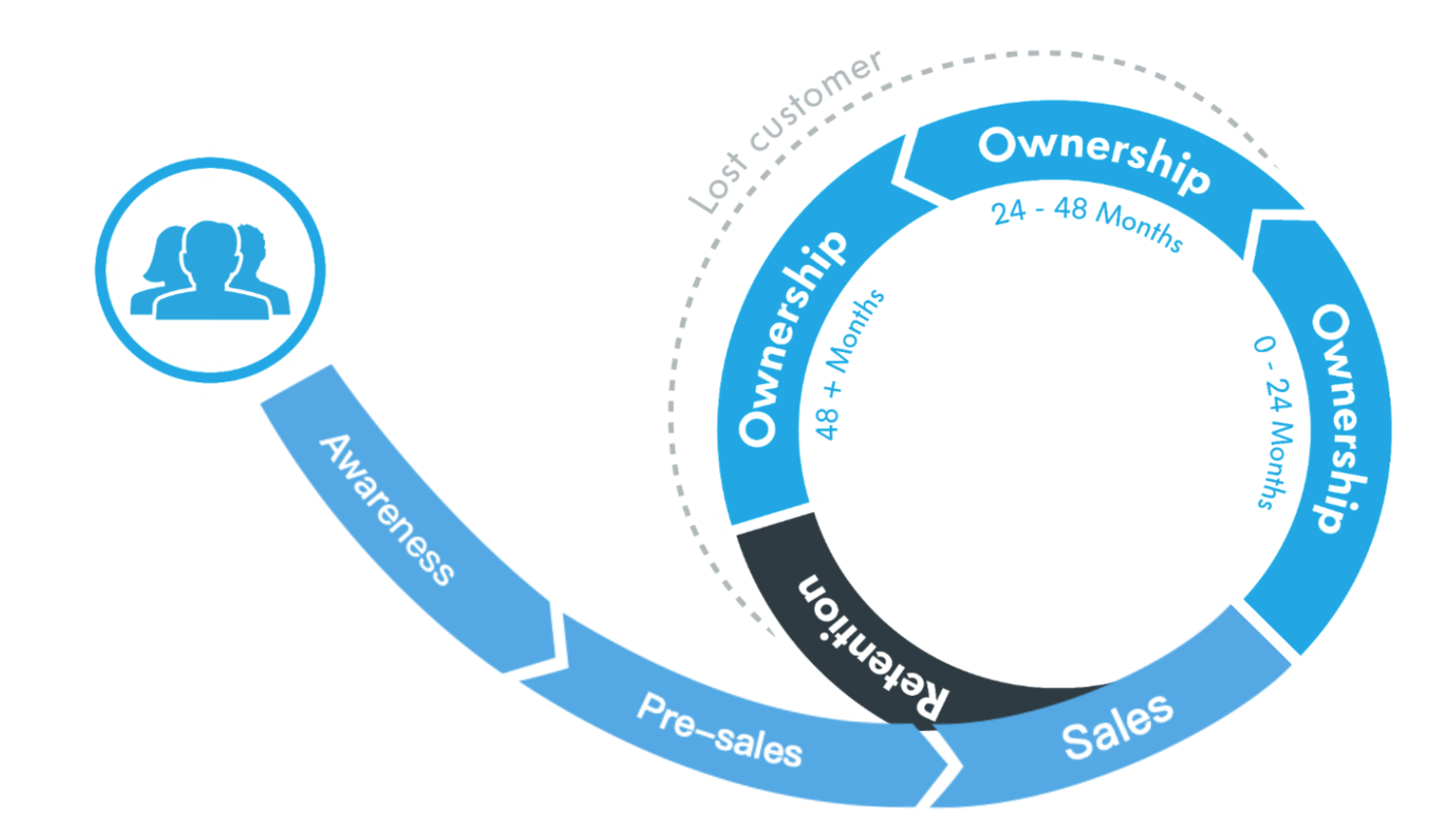
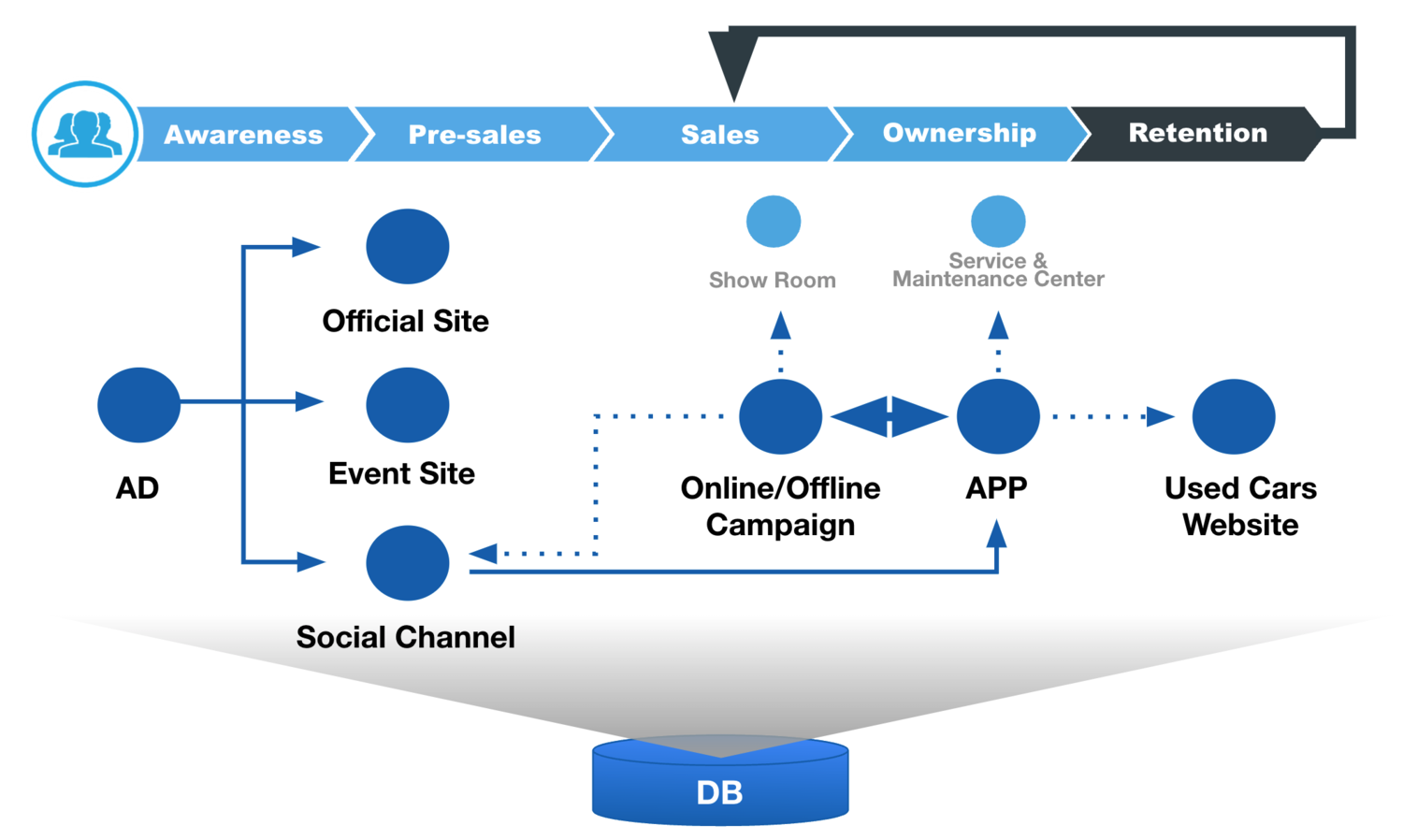
Four findings. Four levers — Accessibility, Reliability, Usability, and Personalization, in the audit's own prioritization framework.
Search & SEO optimization
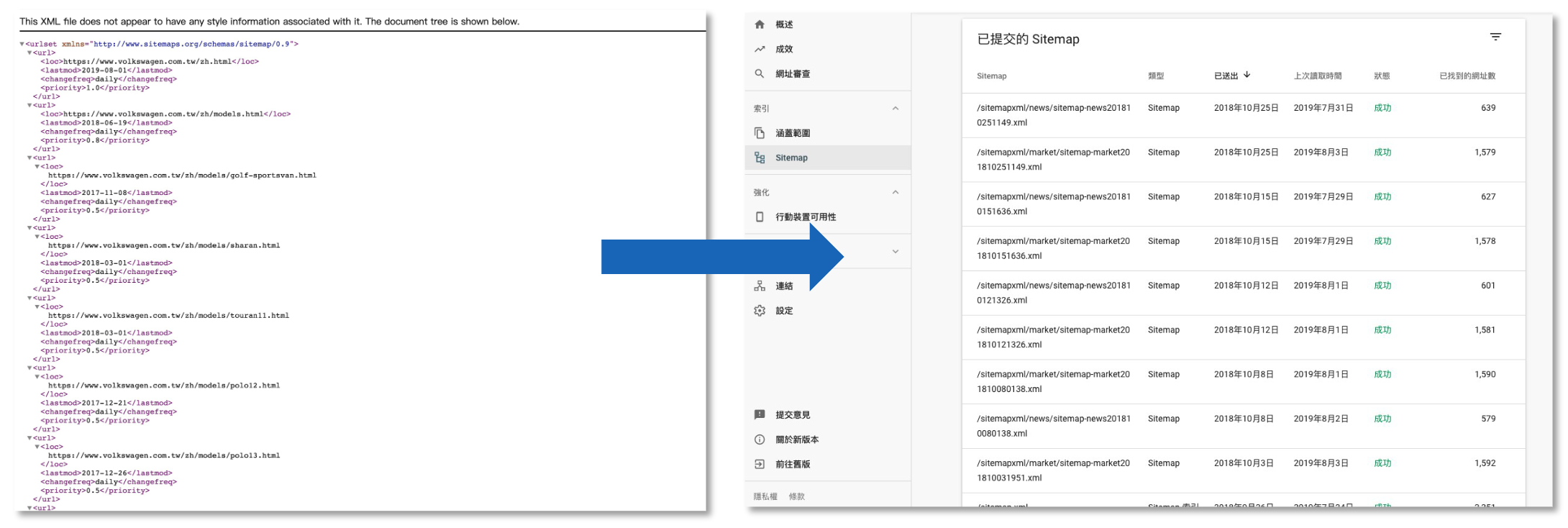
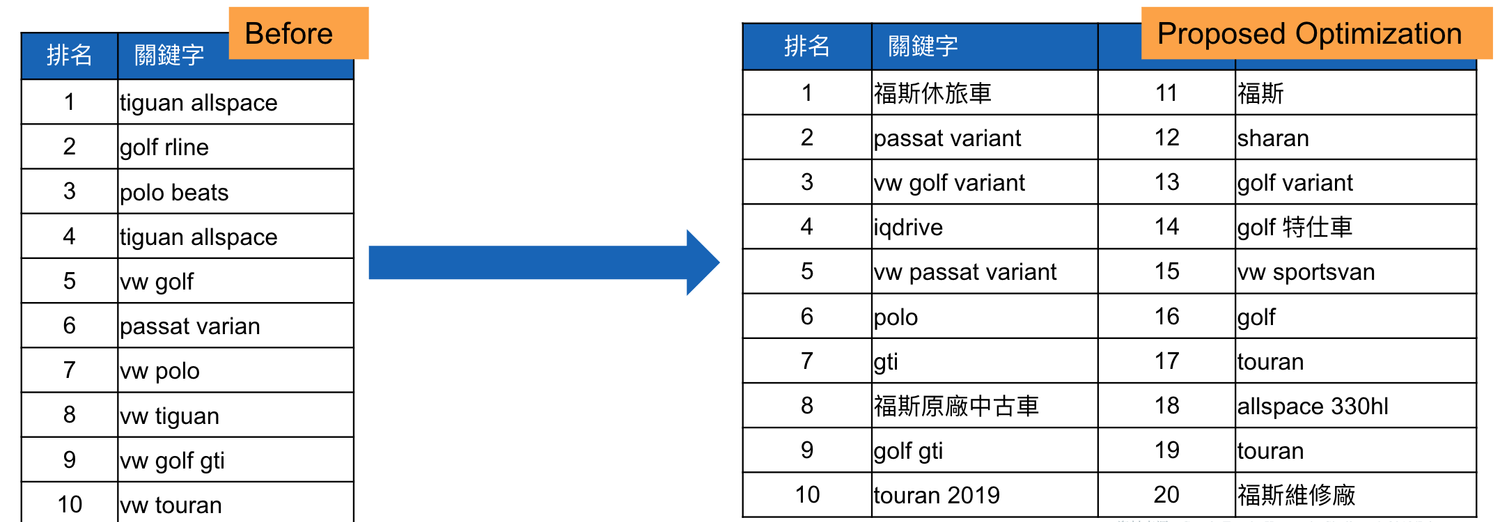
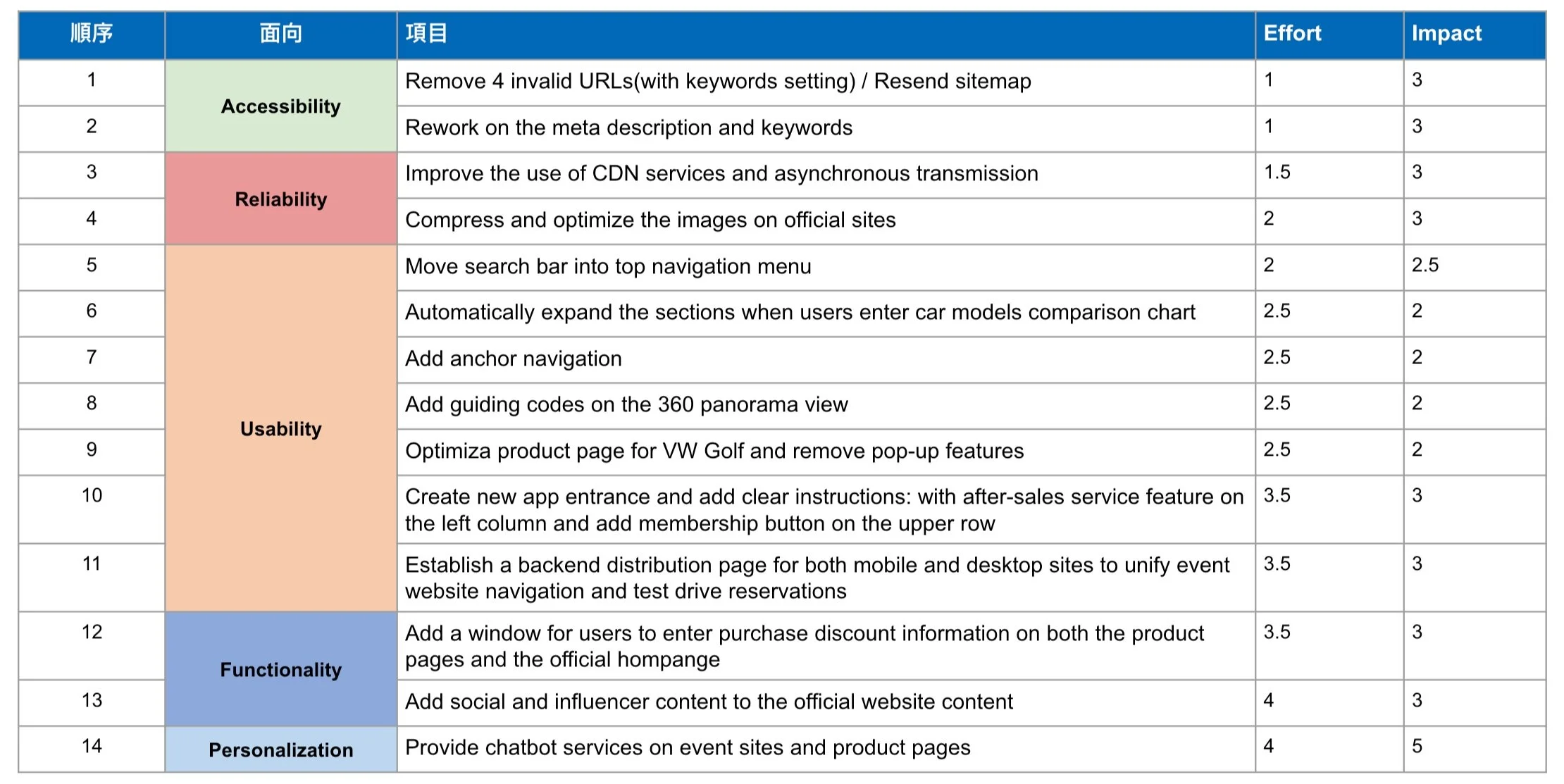
Removed four invalid URLs, resubmitted the sitemap, and reworked meta descriptions and keywords. On the Taiwan site alone, this moved multiple Volkswagen-specific terms (福斯休旅車, vw golf variant, vw passat variant) into the top rankings where generic model names had been crowding them out.
Website & UI enhancements
The car comparison tool buried its categories behind manual clicks; the fix expands them automatically on entry. The Tiguan's 360° view had no visible way to tell there was more to see; the fix added an anchor/progress indicator so people could tell where they were in the view.
Mobile & performance
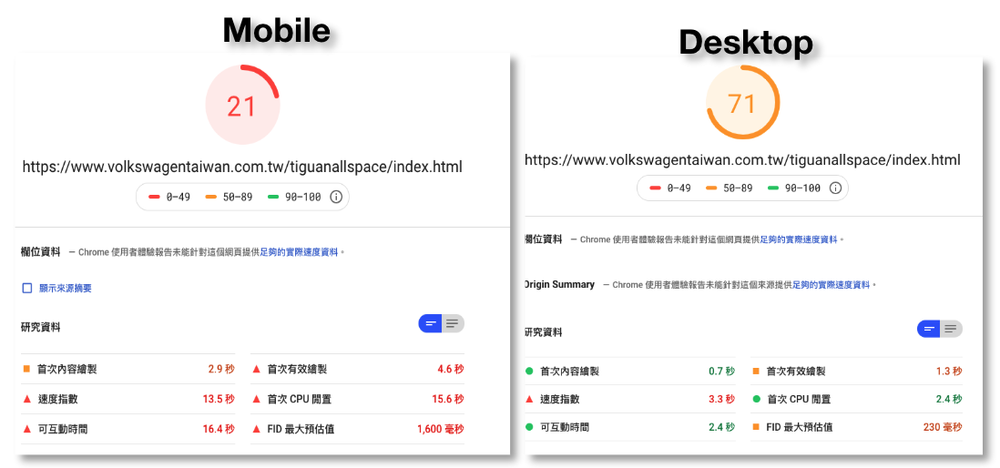
A Google speed audit on the same Tiguan Allspace landing page scored 21 on mobile against 71 on desktop, the gap CDN delivery, lazy loading, and image compression were scoped to close.
Personalization & engagement
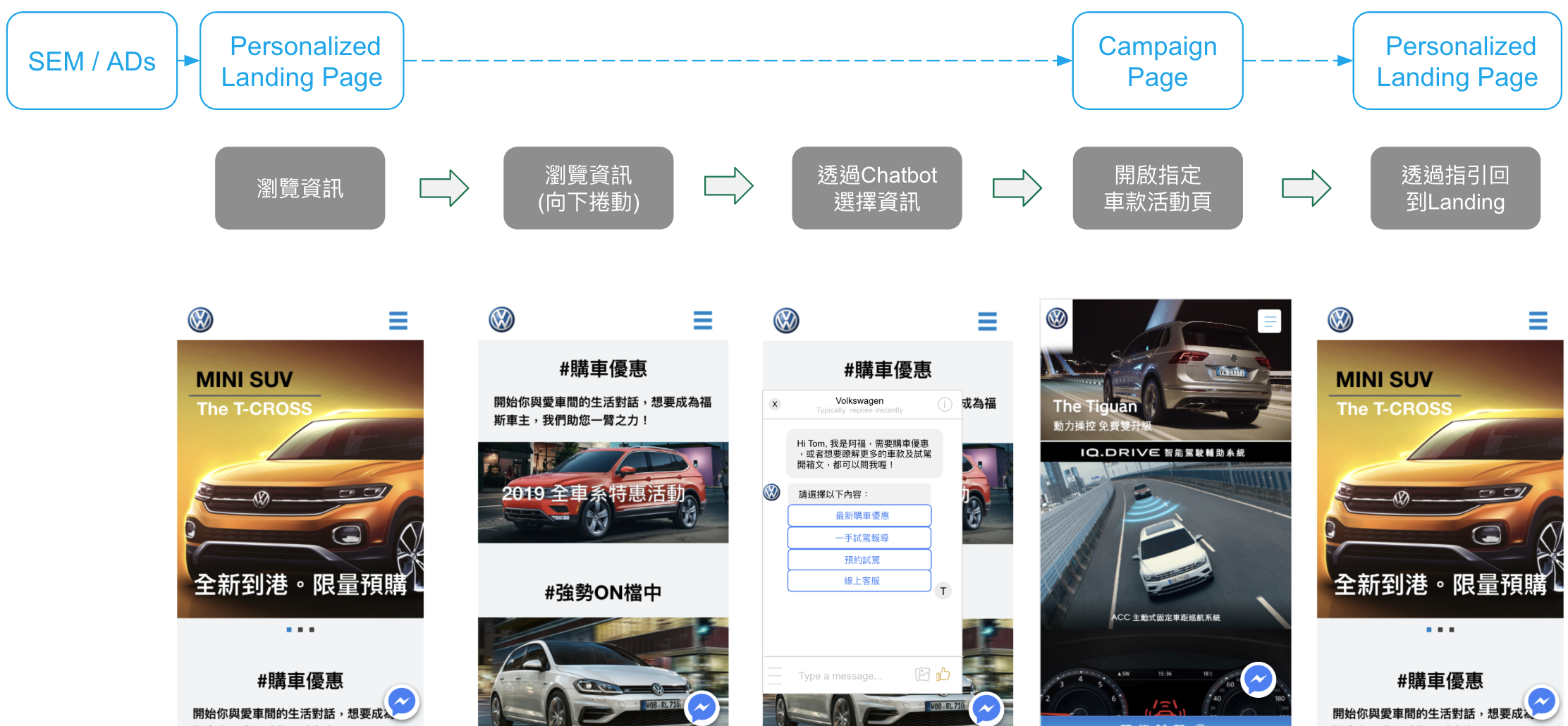
A search ad now lands on a personalized page that hands off to a chatbot ("阿福") for a couple of qualifying questions, then routes into the right model's campaign page, instead of a static landing page hoping the visitor scrolls to the right offer.
Video campaign built on the personalization & engagement recommendations, highlighting safety and reliability for a younger audience. Won multiple awards from the Taipei Association of Advertising Agencies.
How the fourteen fixes actually got ranked, and what else the research surfaced along the way.
Ecosystem touchpoints
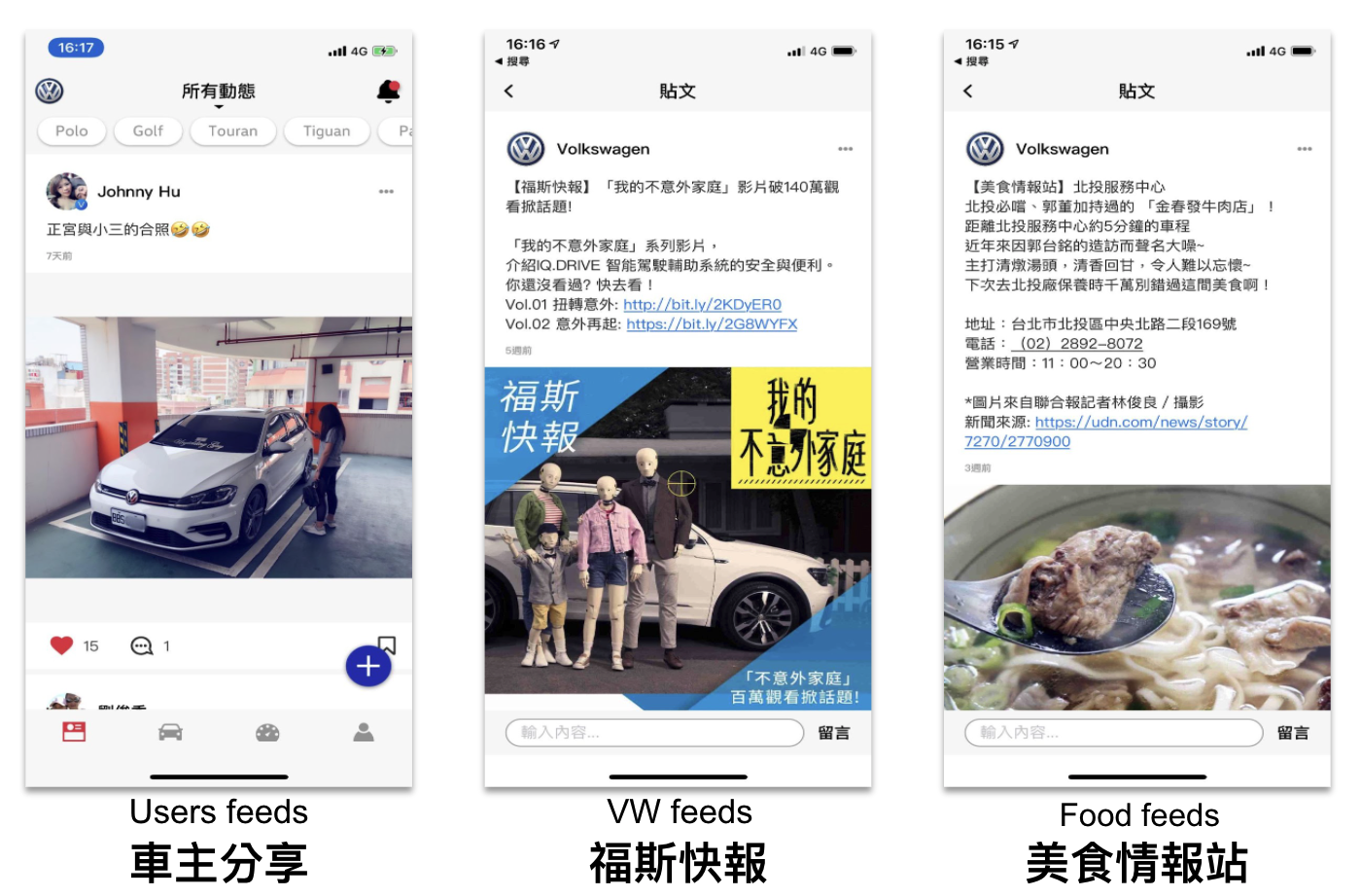
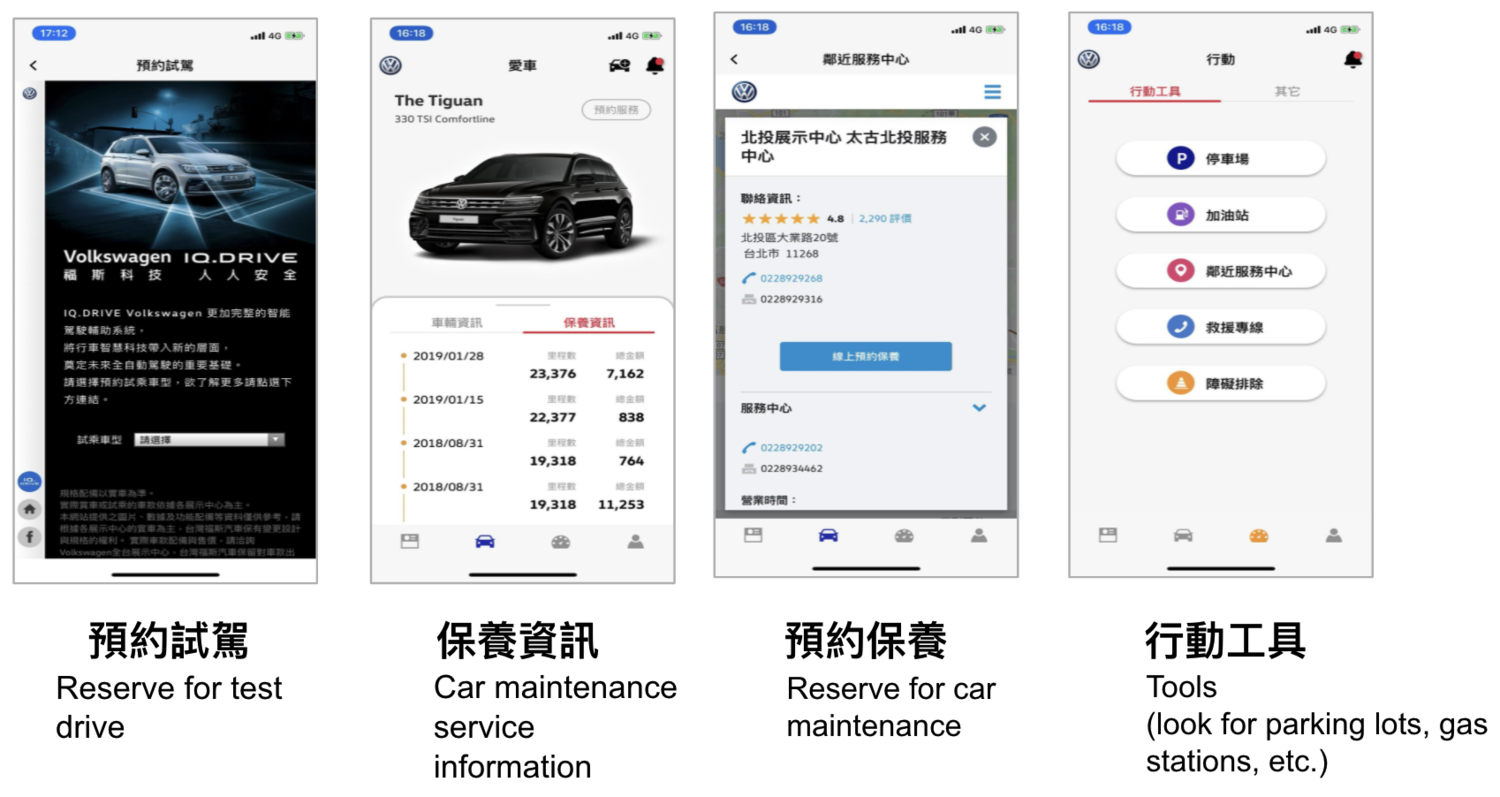
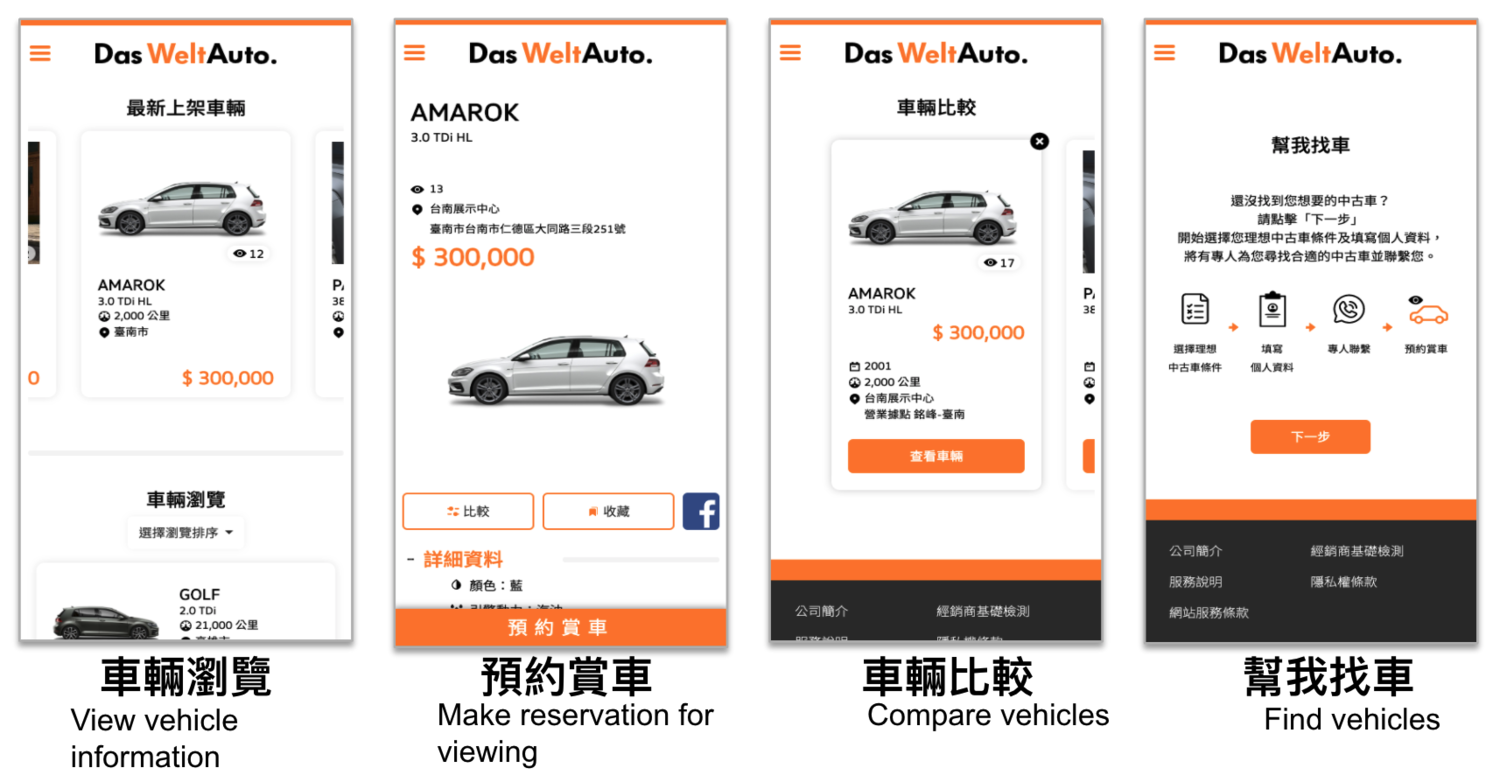
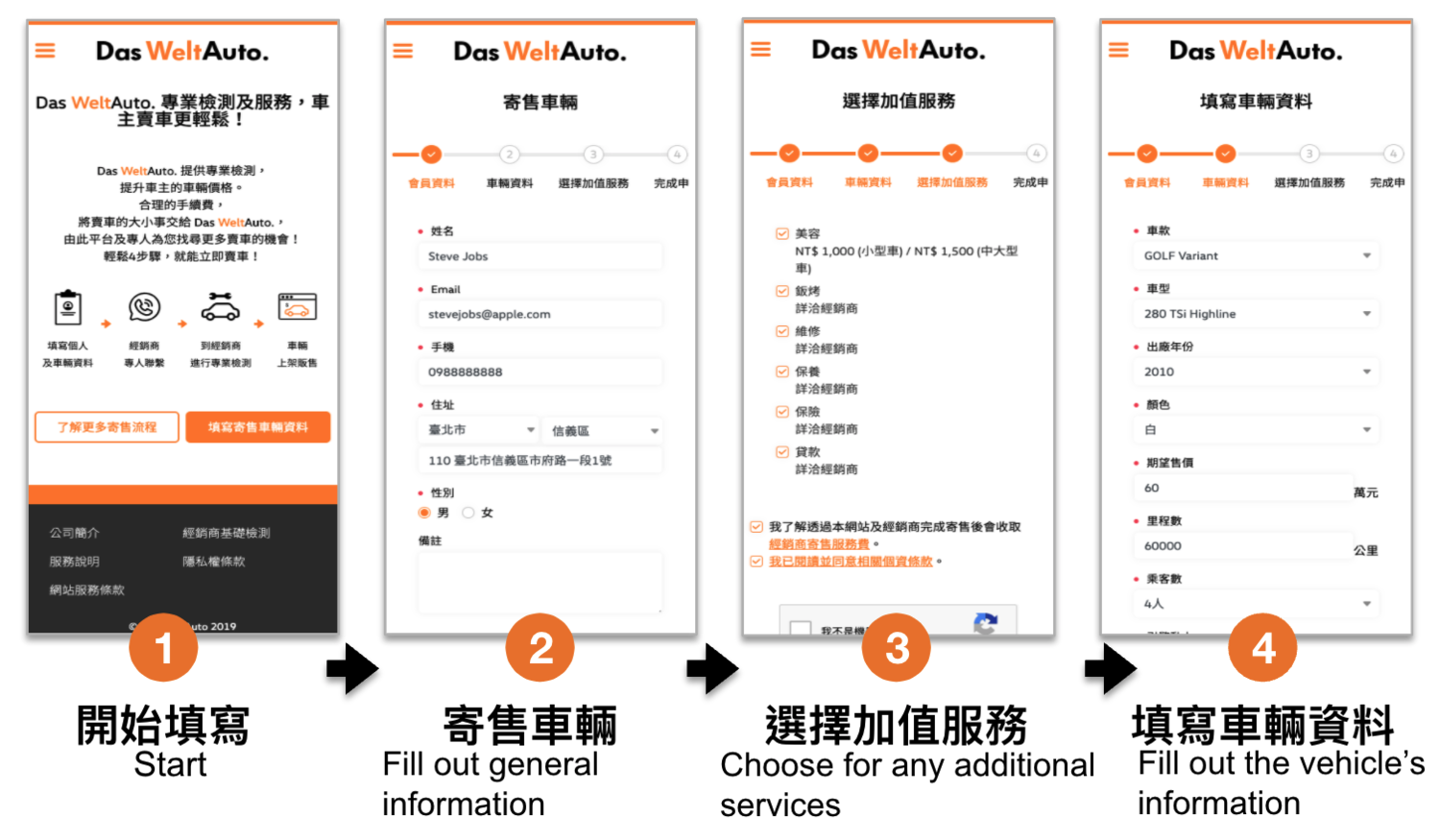
The research also touched two things outside the four core recommendations above: the My Volkswagen app and Das WeltAuto, VW's used-car marketplace. Included here for completeness, not because they drove a specific fix.
What this project shows
Refining Volkswagen's digital ecosystem through SEO, UI, and personalization wasn't about any single fix. It took triangulating quantitative audits, expert evaluation, and direct user research to find out which of the four problems was actually costing the most, and to sequence the work accordingly.
Looking ahead, the proposal flagged deeper personalization, a more seamless omnichannel experience, and staying ahead of shifting digital trends as the next priorities, work that extends past a single audit into an ongoing practice.
Archived from 2019. Originally on Squarespace; migrated here as part of portfolio consolidation.